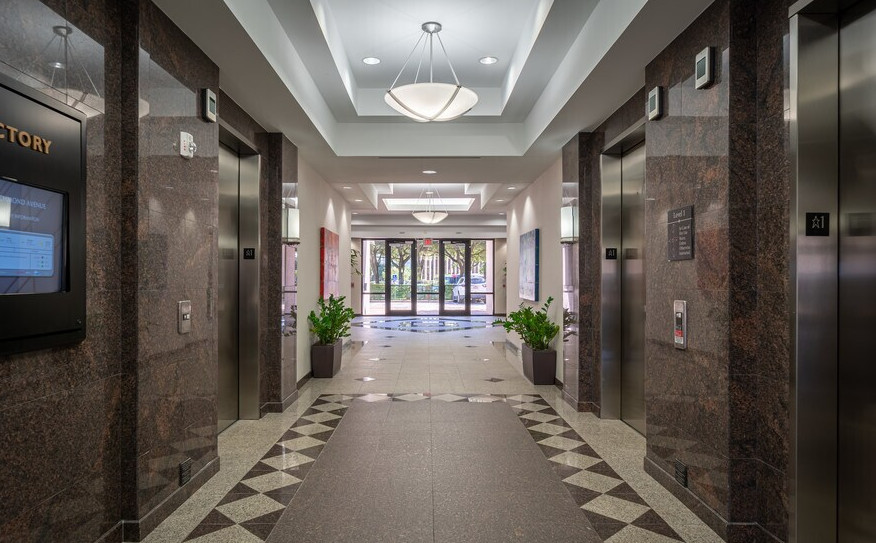
A tenant improvement allowance (TI) is money the landlord contributes toward making a suite fit your business — walls, doors, paint, carpet, lighting, sometimes data and plumbing. It is quoted in dollars per square foot, it is negotiable, and it is worth more attention than the rate, because a bad TI outcome is paid in cash, up front, before you have earned anything in the space.
The three delivery conditions
- As-is. You take the suite in its current state. Cheapest for the landlord, fastest to sign, and entirely your problem to make usable. Fine for a suite that is already close.
- TI allowance. The landlord contributes a set dollar amount per square foot; you spend it on an agreed scope. Anything beyond the allowance is yours to fund. This is the most common structure for a meaningful change.
- Turnkey. The landlord delivers the suite finished to an agreed plan, at their cost and their risk. Simplest for you; the price is inside the rate and the term.
The exchange rate nobody states out loud
TI is bought with term. A landlord amortizes improvement dollars over the lease — so a longer commitment buys a bigger allowance, and a one-year deal buys almost none.
If you want a real buildout, decide what term you can honestly sign before you ask for the allowance. Asking for both maximum flexibility and maximum TI is how negotiations stall.
What an allowance actually buys
Buildout costs are driven by what you disturb. Paint, carpet, and a door are cosmetic and cheap. Moving a wall is moderate. Anything touching plumbing, adding a restroom or a sink, upgrading electrical service, cutting into the ceiling for new HVAC distribution, or triggering ADA or life-safety upgrades is a different order of magnitude — and a different permit path. Practices with clinical requirements should assume the expensive version and start with the medical-office guide.
Which is why the cheapest buildout is the one you avoid. If your layout needs are ordinary, a furnished, move-in-ready suite skips the entire exercise — no allowance to negotiate, no contractor to chase, no permit to wait on.
Timeline, honestly
- Paint and carpet: days to a couple of weeks. No permit, no drama.
- Demising walls, doors, finishes: weeks. Permit-dependent.
- Plumbing, electrical service, HVAC distribution: months, realistically, once design, permitting, and inspection are counted.
Plan backward from your must-occupy date, and add slack. The single most common tenant mistake is starting the search on the assumption that signing is the finish line. Signing is the start of the buildout clock.
Negotiate it at the LOI, not the lease
Scope, allowance, delivery condition, and who manages the work all belong in the letter of intent — a short, non-binding document where changes are free. By the time the lease is drafted, the terms are being defended, not designed. Put the improvement scope in writing, in a drawing if you can, and name who is responsible for permits.
Why owner-operators move faster here
When the landlord is an institution, a buildout decision travels through an asset manager, a property manager, and a construction manager. When the landlord is the owner — and runs their own building operations — the person approving the scope is the person who will live with it. That compresses the loop. It is the same reason our rates and availability are published rather than quoted on request, and it is covered in the going-direct guide.
| Building | Submarket | Asking rate |
|---|---|---|
| 800 Wilcrest Dr | Westchase · 77042 | $15 /SF/yr |
| 11111 Wilcrest Green Dr | Westchase · 77042 | $15 /SF/yr |
| 11200 Richmond Ave | West Houston · 77082 | $18–$20 /SF/yr |
| 11104 West Airport Blvd | Stafford · 77477 | $21 /SF/yr |
Gross Modified asking rates as of mid-2026; individual suites vary by size, term, and condition.
Normalize any buildout offer against the lease structure before you compare it to another building — a generous allowance inside an NNN deal can be worth less than a modest one inside a Gross Modified deal once the passthroughs land. The cost guide lists what else to count.
Skip the buildout entirely
Many of our suites are already furnished and move-in ready — walk them in 3D, with published rates, before you talk to anyone.
Browse available suites Read the furnished-space guide