There is no price list for a building automation system, and the absence is not a conspiracy — it is a consequence. A BAS is not a product you buy; it is a system you assemble against the specific mechanical reality of one building. Two buildings of identical square footage can differ by a factor of several, and the difference is entirely in details nobody can see from a spreadsheet.
What actually drives the number
- Point count. The real currency of a BAS. Every sensor, valve, damper, and status you monitor or control is a point, and points carry hardware, wiring, and programming. Square footage is a poor proxy; point count is the number.
- What is already there. Reusable field devices and sound wiring can dramatically reduce scope. Failed sensors, dead runs, and abandoned controls quietly reintroduce it.
- Integration scope. HVAC only, or HVAC plus lighting plus metering plus the equipment three vendors installed and never documented? Each integration is engineering, not just a licence.
- Protocols. Open protocols — BACnet, Modbus — keep the work competitive. Proprietary ecosystems make every future change a sole-source purchase, which is a cost you pay for twenty years rather than once.
- Programming and graphics labor. Frequently the largest line, and the one most often under-specified. Sequences of operation have to be written, not selected.
- Network and IT. Segmentation, remote access, and security are real work and real coordination with whoever runs your network.
- Commissioning. Proving the sequences actually do what the drawings say. Skipping it is the cheapest way to buy an expensive system that behaves like the old one.
The line item everyone forgets
A BAS is not a purchase — it is a subscription to attention. Budget for ongoing tuning: someone whose job is to keep the sequences honest as tenants, seasons, and equipment change.
A system installed and never revisited decays to the schedules of its commissioning day within a couple of years. That is not a controls failure. That is an ownership failure, and it is where the savings actually live.
Retrofit or replace?
A retrofit — new head-end and controllers over sound field devices — is usually the cheaper path and often the right one. A full replacement makes sense when the field devices are failing, when the existing system is proprietary and unsupported, or when the integration you need is impossible on the existing platform. The deciding question is not age; it is whether the bones can carry the sequences you want to run. That takes a site survey, which is exactly why the quote cannot precede one.
How to get bids you can actually compare
- Issue a point list. Without one, every bidder scopes a different building and you are comparing fiction.
- Specify open protocols and data export. Confirm the data is yours — not merely viewable inside a vendor console.
- Break out the line items. Hardware, wiring, programming, graphics, commissioning, and the year-two service number, separately.
- Price the exit. What does it cost to add a point, change a sequence, or hire a different service contractor in year six? Ask before you sign, not after.
- Require commissioning as a deliverable, with a functional test you get to witness.
The payback trap
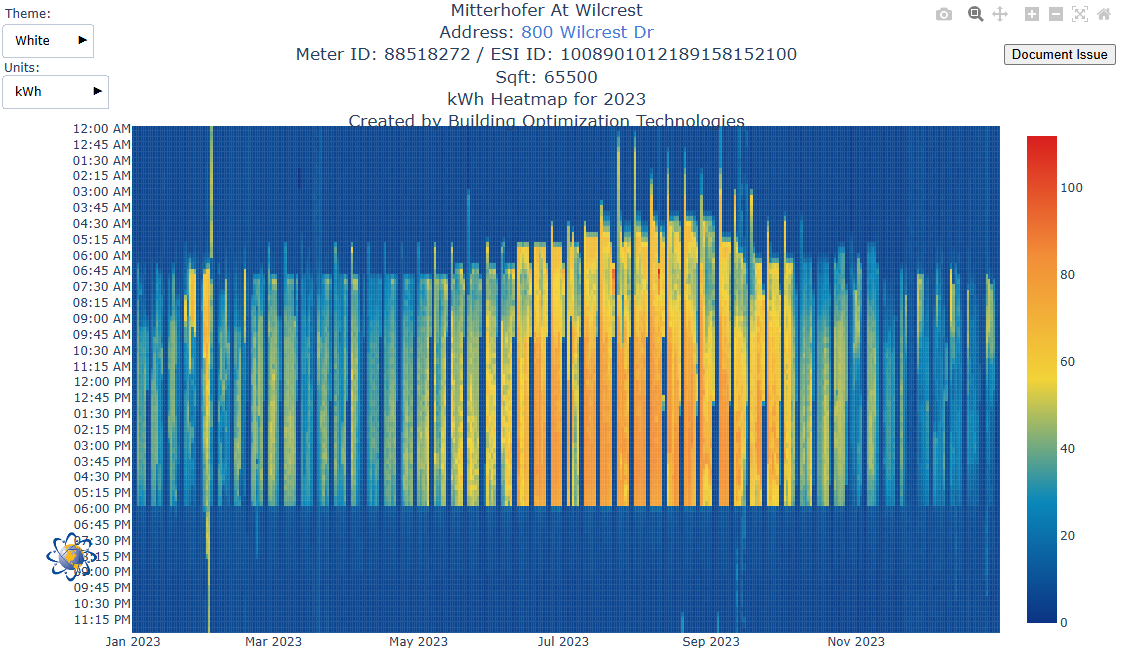
Payback models for controls projects are built on assumed savings, and assumed savings are unverifiable by construction. Before you accept one, ask how the savings will be proven after the fact — which is a measurement and verification question, not a sales one. And ask the cheaper question first: what would this building do if it were simply operated properly for six months? Frequently a meaningful share of the modeled savings is available without the capital, and the honest scope shrinks accordingly. Our own experience is in the energy-savings write-up: roughly half the energy at 800 Wilcrest Dr went away, and the equipment mostly stayed.
If you are still deciding what an integrated system even is, start with the BAS explainer; if you are choosing the software layer that sits above it, the EMIS buyer’s guide is the companion piece.
We run one, we don’t sell one
Building Optimization Technologies operates the four G&W Holdings buildings on integrated controls and continuous tuning. The portfolio is the demonstration.
Explore the portfolio What “integrated” means