A building automation system (BAS) controls a commercial building’s HVAC, lighting, and other systems from one central platform using sensors and controllers. An integrated BAS adds open protocols such as BACnet and a single layer for graphics, trending, and alarms. BOT uses that live data to schedule equipment, catch faults early, and verify savings.
A building automation system (BAS) — sometimes called a BMS — is the control layer of a commercial building: the network of sensors, controllers, and software that operates HVAC and, in fuller deployments, lighting, metering, and access-adjacent systems. An integrated BAS is the version where those systems share one nervous system — one platform, one data model, one place where the building can be seen and steered. In practice it has two layers: the software you log into — graphics, trending, alarms, and scheduling — and the field controllers wired to the equipment that carry out the commands.
What a BAS actually does all day
- Schedules — starts and stops equipment to match real occupancy instead of running everything, always.
- Setpoint control — holds zones at target temperatures and pressures, adjusting as loads change.
- Sequencing and staging — decides which chillers, boilers, fans, and pumps run, in what order, at what capacity.
- Alarming — flags failures and drift: a stuck damper, a sensor gone flat, a unit short-cycling at 2 a.m.
- Trending — logs the data that makes optimization and diagnostics possible at all.
“Integrated” is the load-bearing word
Many buildings run islands: HVAC on one vendor’s controls, lighting on another, meters reporting to a spreadsheet nobody opens. Each island works; the building doesn’t. Integration — typically over open protocols like BACnet and Modbus — puts systems on a common platform so they can coordinate: cooling that responds to actual occupancy, equipment staged against real-time metering, one alarm queue instead of four logins.
Why open protocols matter
Proprietary control ecosystems lock a building to one vendor’s parts, pricing, and programming labor for decades.
Open-protocol systems (BACnet, Modbus and kin) keep the owner in control — competitive service bids, best-of-breed additions, and data that’s yours to analyze rather than trapped in a vendor console.
Integration checklist: what ‘integrated’ has to mean
“Integrated” is a claim, so hold it to a test. Before you accept a system described that way, make it demonstrate four things in the same sitting:
- Open protocols. HVAC, lighting, and metering speak BACnet or Modbus natively, and the data is exportable — not merely viewable in one vendor’s console.
- A single graphics layer. One set of floor plans and equipment screens covers every system; an operator should never need three logins to see one building.
- Shared trending. Every point from every system lands in the same history at the same interval, so a chiller trend and a meter trend line up on one axis.
- One alarm path. Every fault from every system reaches the same queue under the same priority scheme — not one alarm e-mail per vendor.
A system that passes all four is integrated. One that passes two is a collection of islands with a shared logo.
MEASURED RESULTS
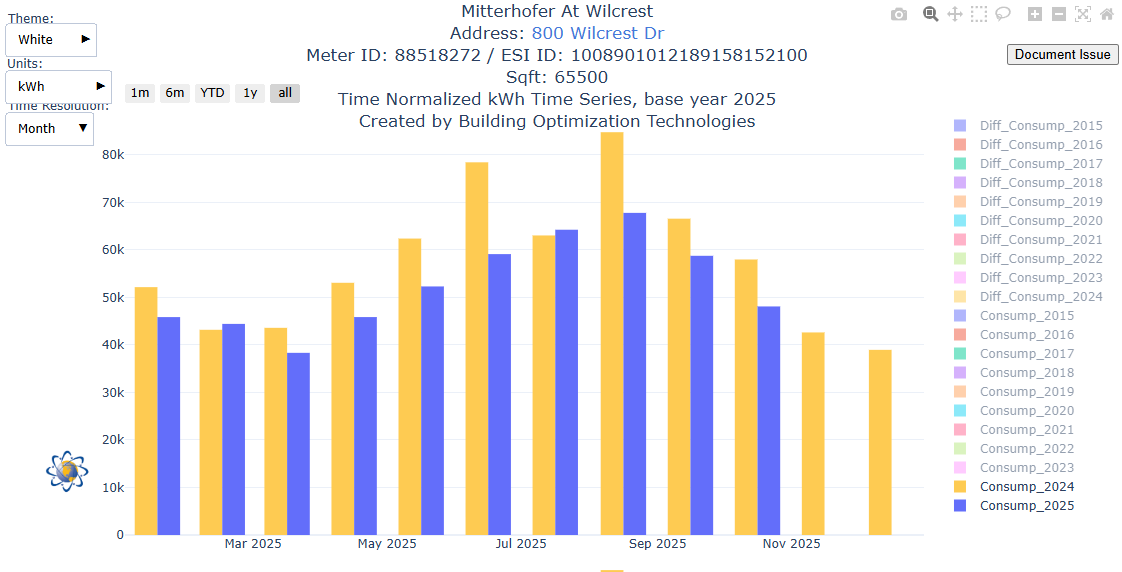
The in-house BAS beta at 800 Wilcrest
After our in-house BAS beta went live around March 2025 to optimize airflow and scheduling, 800 Wilcrest cut roughly another 25% of electricity year over year — with an enhanced version rolling out mid-2026.
See 800 Wilcrest Dr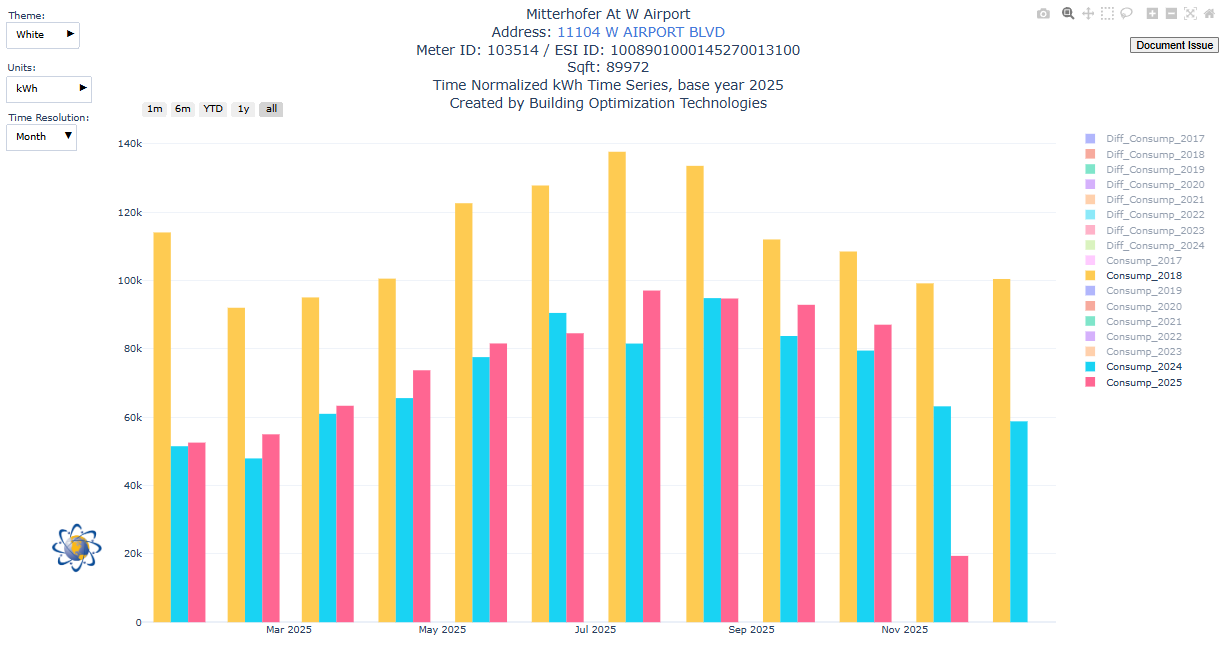
MEASURED RESULTS
Eight years of tuning at 11104 West Airport
Time-normalized annual electricity at 11104 West Airport fell about 36% from 2018 to 2025 through scheduling, equipment selection, and continuous monitoring.
See 11104 West Airport BlvdWhat integration is worth
The gains are unglamorous and durable: energy waste removed by scheduling and staging that fit reality; comfort complaints reduced because zones are controlled against measured conditions; maintenance that becomes targeted because the system tells you which unit is drifting before tenants do. The magnitude varies by building and baseline — an uncontrolled building improves dramatically, a tuned one incrementally — which is exactly why the follow-up discipline of optimization and measurement matters as much as the install.
A short buyer’s checklist
- Open protocols first. BACnet/Modbus support, and confirm the data is exportable, not just viewable.
- Trend everything cheap to trend. Storage is cheap; missing history is expensive. Insist on granular trending from day one.
- Graphics people actually use. A BAS your operator avoids is a BAS the building ignores.
- Remote, secure access. Problems don’t keep office hours; your visibility shouldn’t either.
- Name the owner. Someone — in-house or partner — must own tuning after handover, or the system decays to the schedules of its commissioning day.
TRY IT LIVE
A year of a building as one picture
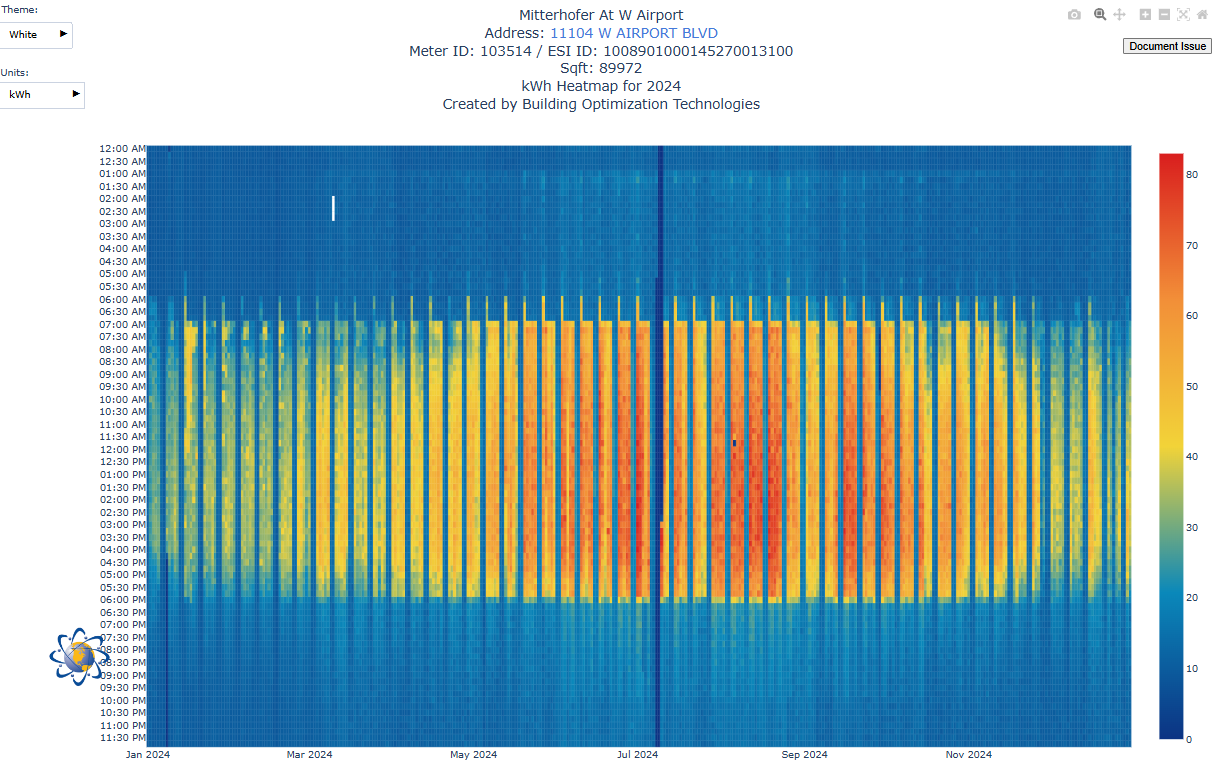
Our Energy Heatmap apparatus draws a full year of live 15-minute meter data from our buildings — the trending a BAS makes possible, on display.
Open the Energy HeatmapWe’re operators, not resellers
Building Optimization Technologies runs the four G&W Holdings buildings in West Houston on exactly this playbook — integrated controls, continuous monitoring, and relentless small adjustments, under the banner of efficiency through data. Our tenants feel it as comfort and predictable Gross Modified rates; our operating story is on display, not in a brochure.
See an integrated building from the inside
Our portfolio is the demo: four Class A buildings run on data, with the results published — down to ERCOT peak-season reports.
Explore the portfolio How we measure results