A building is not smart because it has sensors. A building is smart when a decision changes without a human noticing the problem first. That is a high bar, most products do not clear it, and the gap between the two is where a great deal of proptech budget goes to die.
The three-layer test
- Sense. Measure something — temperature, occupancy, kilowatts, status. Easy. Cheap. Increasingly given away.
- Decide. Turn the measurement into a judgment: this is abnormal, this costs money, this is the third Saturday in a row.
- Act. Change the building. Adjust a setpoint, shed a stage, close a damper, open a work order that someone actually closes.
Most “smart building” products stop at layer one and sell you a dashboard. Some reach layer two and sell you an alert. The ones that pay for themselves reach layer three — and reaching layer three requires a control system underneath, which is precisely the part nobody puts in the brochure.
The question that kills most demos
“When this detects the problem, what changes in the building — and who has to be awake for it to happen?”
If the answer is an email to a facilities manager who receives two hundred emails a day, you have bought a sensor, not intelligence.
What reliably pays
- Metering at a useful granularity. Interval data at the whole-building level at minimum; submetering where a real decision depends on it. Everything else in this list depends on this one.
- Scheduling that reflects reality. The dullest measure in the industry and, in most buildings, the largest. Occupancy data is only worth collecting if it actually feeds the schedule.
- Resets and staging. Supply temperatures and equipment sequencing that move with load instead of sitting where they were set at commissioning. Covered in the HVAC optimization guide.
- Fault detection. A stuck damper costs money silently for years. Automated fault detection is the closest thing to free money in this category — provided someone acts on it.
- Peak awareness. Knowing which fifteen minutes set your demand charge, and which four summer intervals set next year’s 4CP transmission bill, is worth real money in Texas specifically.
- Remote visibility. Problems do not keep office hours. Neither should your ability to see them.
What usually disappoints
- Occupancy sensors nobody wired into control. Beautiful heatmaps of desk usage, feeding precisely nothing.
- Dashboards without an owner. If nobody’s job includes opening it, its value is zero on day thirty-one.
- Digital twins without a data pipeline. A model of a building that is not fed by the building is an expensive drawing.
- AI that cannot reach an actuator. A recommendation engine with no path to the control system is a very confident newsletter.
- Retrofits sold on modeled savings with no plan to verify them afterward.
The integration tax
Every smart-building product assumes it can talk to your building. That assumption is where budgets break. If your controls are proprietary, closed, or undocumented, the integration is engineering — and it will cost more than the product. Open protocols are not an ideological preference; they are the thing that makes everything downstream affordable. The integrated BAS explainer covers why, and the BAS cost guide covers what it takes to get there.
The boring truth
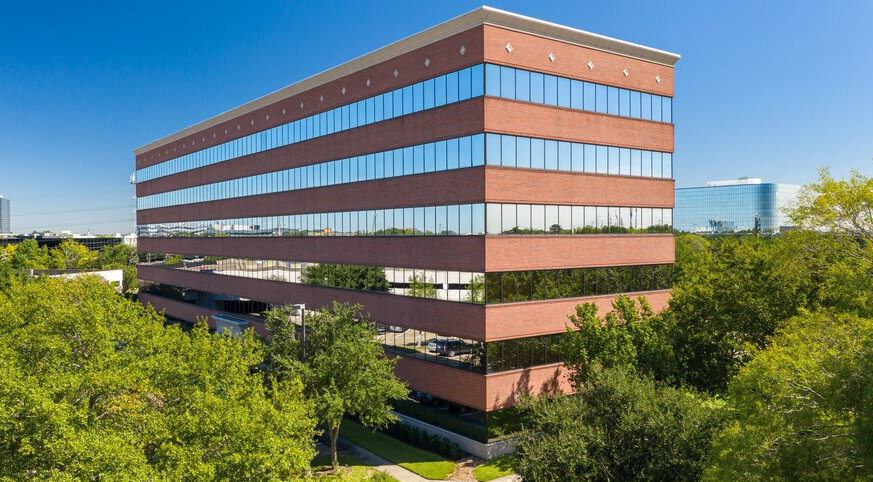
Most of the value marketed as “smart building technology” is old-fashioned controls, done well, and watched daily by someone who cares. We run four Class A buildings in West Houston on exactly that — and roughly half the energy at 800 Wilcrest Dr went away between 2015 and 2025 without a single product that had “smart” in its name. The full account is here, caveats included. An older building can absolutely become a smart building. It mostly needs attention, not a rebrand.
Efficiency through data — the unglamorous version
Four buildings, integrated controls, continuous tuning, published results. No screens required.
Explore the portfolio See what actually worked