A commercial building energy audit is a structured assessment of how a building uses energy — from a Level 1 ASHRAE walk-through to a Level 3 investment-grade study. It produces a prioritized list of measures and estimated savings. Its limit is that it is a snapshot: a few days of inspection, not a year of metered data.
An energy audit is one of the most useful things you can do to a building you don’t instrument — and one of the easiest to over-trust. It frames the opportunity well and confirms almost nothing on its own. This guide walks the three standard audit levels, what a competent audit finds in a typical Houston office building, what a one-time look misses, and what continuous metered data does that an audit cannot.
The three audit levels (ASHRAE 1, 2, 3)
ASHRAE defines commercial building energy audits in three levels of increasing depth (ASHRAE Standard 211; the U.S. Department of Energy’s energy.gov is a good primary reference for the general framework):
- Level 1 — Walk-Through. A site visit plus a review of utility bills: low- and no-cost measures, a rough savings estimate, and a sense of where the money goes.
- Level 2 — Energy Survey and Analysis. A detailed survey of systems, a breakdown of energy use by end use, and savings-and-cost estimates for specific measures — enough to support most retrofit decisions.
- Level 3 — Detailed Analysis of Capital-Intensive Modifications. Investment-grade: field monitoring, energy modeling, and engineering-grade estimates for major capital projects.
We do not quote audit costs here. They vary widely by building and scope, and any figure worth citing should come from the firm doing the work — attributed, for your building, not a number from an article.
What an audit finds in a typical Houston office building
In a typical Houston office building, a competent audit surfaces the same short list again and again: HVAC running on the wrong schedule, simultaneous heating and cooling, after-hours and weekend loads serving an empty building, and demand peaks that drive up both energy and — in Texas — transmission charges. These are real and worth fixing. The catch is that a walk-through sees them on the day it visits.
What a one-time audit misses
A one-time audit is a photograph of a building that is actually a film. It misses:
- Seasonality. A July cooling problem is invisible on a February visit.
- Drift. Controls slip back weeks after a fix, and a report filed in spring never sees it.
- 4CP exposure. The handful of summer afternoons that price next year’s transmission charges — see our ERCOT 4CP explainer — don’t show up in a scheduled audit.
- Measurement and verification. Whether the savings an audit predicted actually arrived is a separate exercise; our M&V / IPMVP guide covers how that is proven.
An audit predicts. Only measured data confirms.
Audit vs. continuous monitoring: what BOT does instead
Instead of a once-a-year snapshot, BOT runs continuous interval metering on its own buildings: 15-minute data feeding fault detection and diagnostics and measurement and verification to IPMVP Option C. The audit’s one-time findings become a standing signal — the schedule that slipped last Tuesday shows up on Wednesday, not next year. The two are complements, not substitutes: the audit frames the opportunity; the data tells you whether you captured it and kept it. The analytics layer that does this is the EMIS, and choosing one is mostly about open data access and the operating loop your team will actually run.
The 800 Wilcrest example
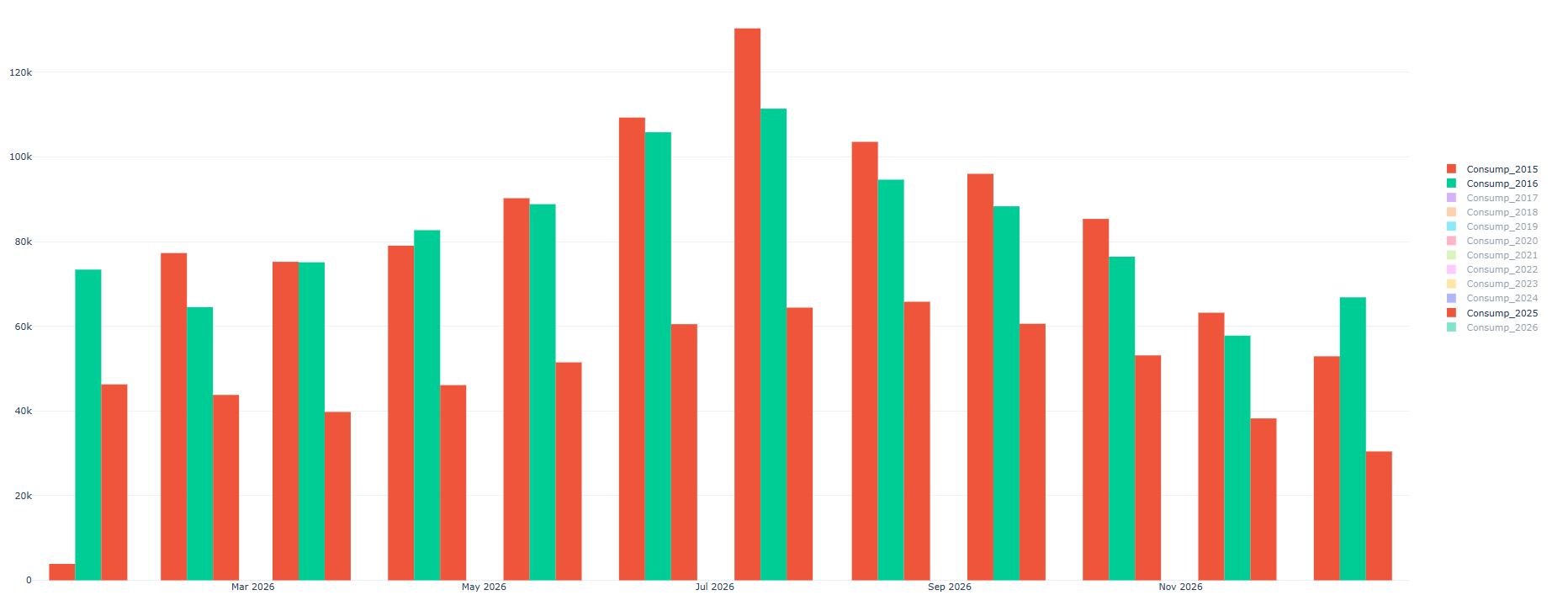
On our own 800 Wilcrest Dr, the measures an audit would flag — scheduling, setpoints, sequencing — plus a decade of continuous operation produced a roughly 50% reduction in energy over 2015–2025 (time-normalized, not weather-normalized). That qualifier is the honest part: the figure removes the effect of how much the building ran, not the effect of a hot year versus a mild one. It is a measured operating result on a building we own, not a projection from a walk-through. The same discipline across the portfolio shows up in the summer cooling-cost guide and in the integrated BAS that carries out the schedules.
When you still need a formal audit
Continuous monitoring does not replace a formal audit when a third party requires one. Lenders financing an efficiency retrofit, incentive programs, and some benchmarking or disclosure ordinances ask for an ASHRAE-level audit by an independent engineer. When that is the requirement, get the audit — and feed it with the metered data you already have, which makes a Level 2 or 3 faster and more defensible.
See a building that runs on its own data
Four owner-operated West Houston buildings on continuous interval metering, fault detection, and M&V — the measured version of what an audit only predicts.
See the buildings How savings are verified