From June through September, cooling is the dominant energy story in every Houston office building. Costs climb for two reasons: you consume more kilowatt-hours, and — less obviously — summer afternoons set the demand peaks that drive a building’s power charges for months. Now, deep into the back half of the season, both levers are at their annual worst — late August and September bring Houston’s most punishing afternoons — so cutting cost means pulling both at once.
What tenants control (more than you’d think)
- Respect the schedule. Buildings cool to a standard occupancy schedule; after-hours HVAC is typically billed hourly. Consolidate late work to planned evenings instead of ad-hoc requests across the week.
- Mind the setpoint. Every degree of extra cooling costs real money at Houston humidity. 74–75°F with decent airflow keeps most offices comfortable; taping the thermostat at 68 does not make Friday better, only pricier.
- Manage solar gain. Blinds down on west-facing glass after lunch takes a surprising bite out of the afternoon load — the hours that matter most.
- Audit the plug load. Server closets, space heaters fighting the AC (yes, it happens), old refrigerators, and always-on equipment add heat you then pay to remove. Twice.
- Shift what’s shiftable. Heavy equipment runs, big print jobs, dishwashers — push them to mornings. Late-afternoon load is the expensive load in Texas (more on why in our 4CP explainer).
TRY IT LIVE
Demand Response apparatus
Real daily peaks at 11111 Wilcrest Green — drag the demand cap and watch the dollars move. The afternoon-peak lever, made visible.
Open the apparatusTRY IT LIVE
Economizer Map
The hours Houston hands you free cooling — see when outside air can do the cooling work instead of the compressors.
Open the apparatusWhat the building controls (and how to judge a landlord)
The bigger lever is how the building itself runs. Optimized start/stop schedules, sane setpoints, functioning economizers, tuned equipment staging, and continuous monitoring routinely separate a disciplined building from an expensive one — same climate, same glass, different bills. Our buildings run under Building Optimization Technologies’ continuous monitoring — “efficiency through data” isn’t a slogan, it’s the operating system — and we publish ERCOT 4CP season reports tracking the grid’s peak windows in real time. Ask any prospective landlord how they manage summer peaks; the quality of the answer predicts your operating costs.
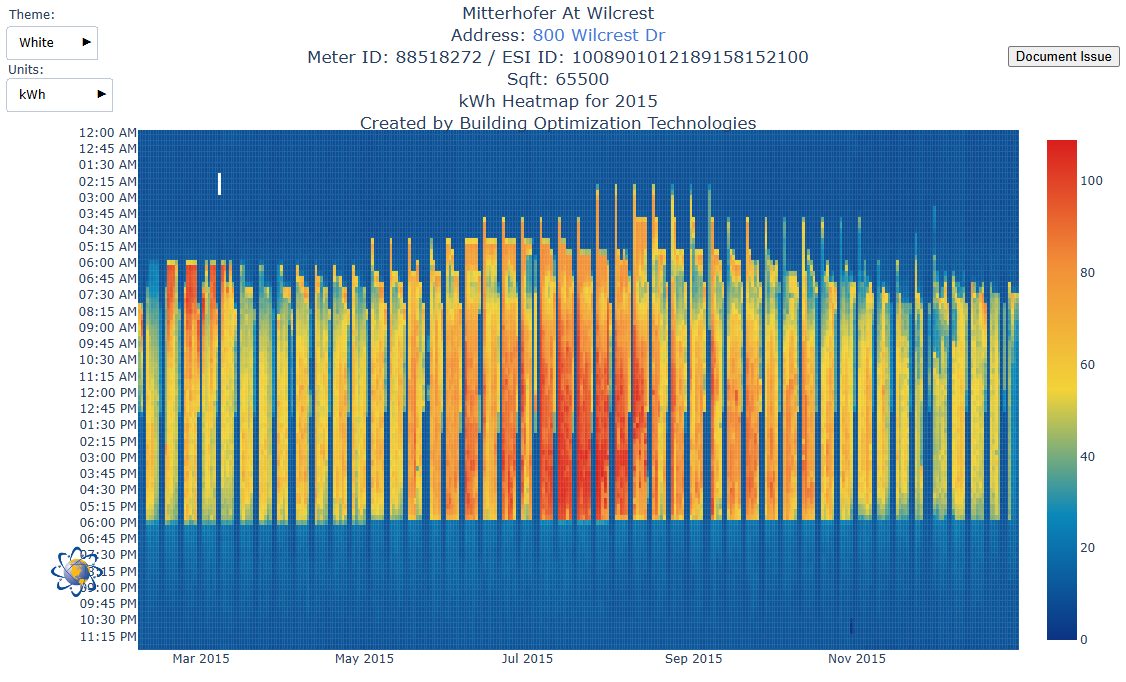
MEASURED RESULTS
800 Wilcrest, 2015: legacy operation
Baseline kWh heatmap under legacy operation — long HVAC runtimes and limited overnight setback.
See 800 Wilcrest Dr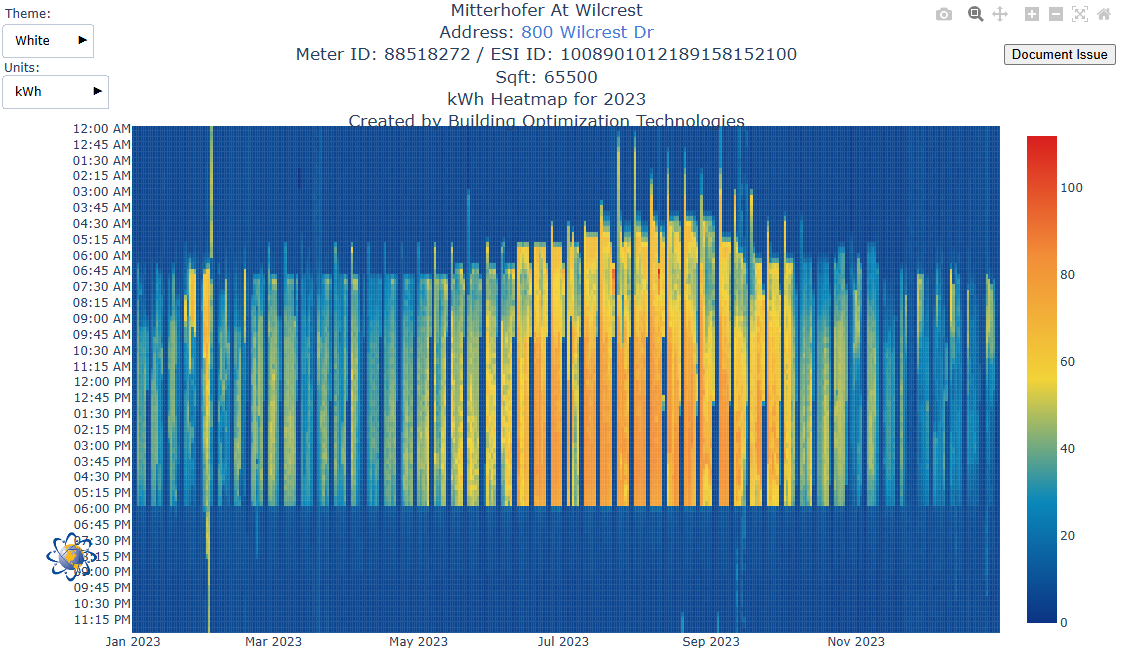
MEASURED RESULTS
800 Wilcrest, 2023: optimized operation
The same building under optimized operation — tight schedules, with RTUs migrated to gas heating reducing winter electric demand.
See 800 Wilcrest DrWhy lease structure decides who feels the pain
Under a Gross Modified lease, the building’s big cooling costs live inside the landlord’s rate — which means a landlord who optimizes has room to keep rates honest, and a tenant’s direct exposure is mostly their own suite’s electricity and habits. Under NNN structures, summer inefficiency passes straight through to you. Either way, the cheapest kilowatt-hour is the one a well-run building never consumes.
Lease in buildings that sweat the summer for you
Four Class A West Houston buildings, continuously monitored and tuned — with Gross Modified rates that keep your budget boring.
Browse available suites How Texas power pricing works