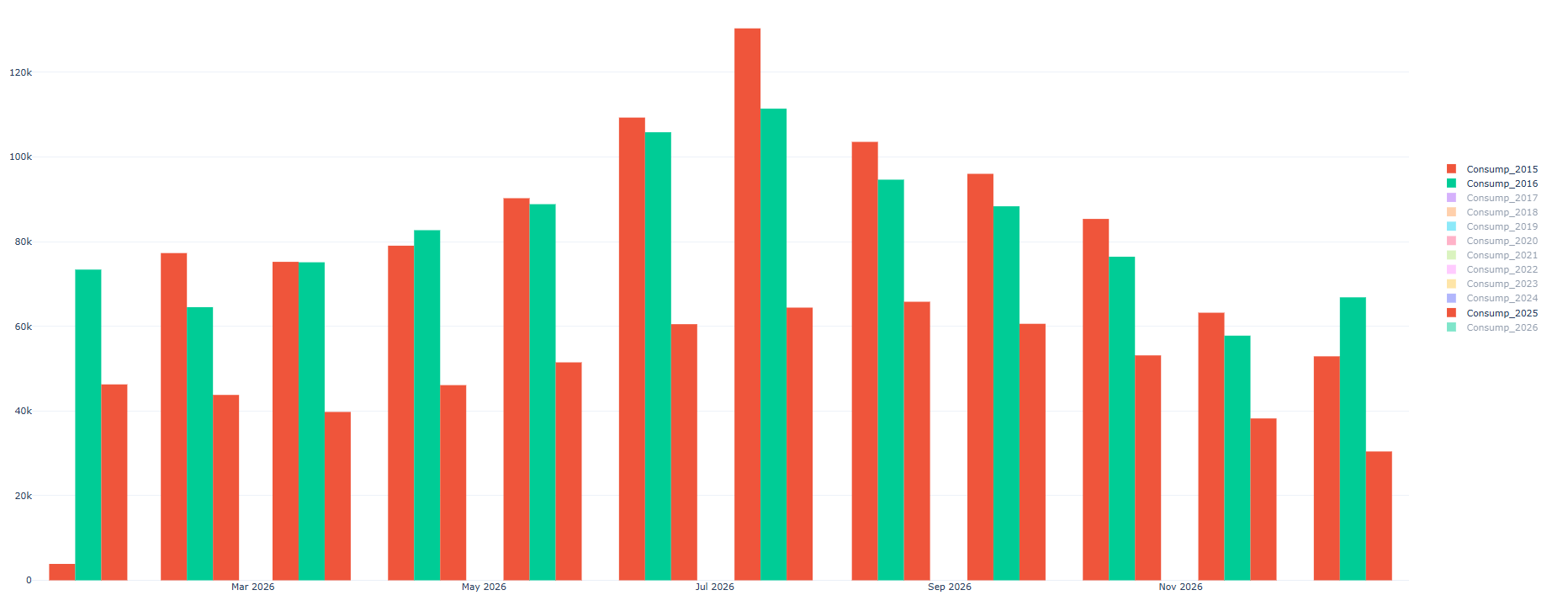
Most of Texas runs on a deregulated retail market inside the ERCOT grid: you (or your landlord) choose a retail electric provider and contract an energy price, while the local utility delivers the power over its wires. That structure is why two identical businesses can pay very different totals — and why the “rate” you shopped is only one of three numbers that matter.
The three layers of a commercial bill
Energy · Delivery · Demand
Energy charges (¢/kWh) — the contracted price for the electricity itself, set by your retail provider and plan. This is the number people shop — and the easiest to compare.
Delivery charges — the regulated utility’s fees for moving power over its wires. Same for every provider in a territory; they ride along on the bill.
Demand charges ($/kW) — for many commercial meters, charges based on your highest usage bursts, not your total consumption. Fifteen bad minutes can shape the month’s bill — and for larger meters, summer grid peaks shape the whole next year (see our 4CP explainer).
The practical consequence: a bargain ¢/kWh contract can hide an expensive month if your demand profile is spiky. Flattening when you use power often saves more than renegotiating what you pay per unit — the playbook lives in our demand-charge guide.
TRY IT LIVE
Demand Response, hands-on
Real daily peaks at 11111 Wilcrest Green — drag the demand cap yourself and watch the dollars move.
Open the apparatusTRY IT LIVE
Load Duration Curve
35,040 real intervals from a year of building data, sorted — the shape of a spiky versus steady load profile.
Open the apparatusWhat actually drives your rate up or down
- Contract timing and term. Commercial energy prices move with the wholesale market; when you sign matters as much as who you sign with.
- Load profile. Meters with steady, predictable usage price better than spiky ones — providers price your risk.
- Summer behavior. In ERCOT, late summer afternoons are the expensive hours — for consumption, demand, and (for larger meters) next year’s transmission allocation.
- The building you’re in. A continuously tuned building simply needs fewer kilowatt-hours and gentler peaks to deliver the same comfort — the discount nobody has to negotiate.
MEASURED RESULTS
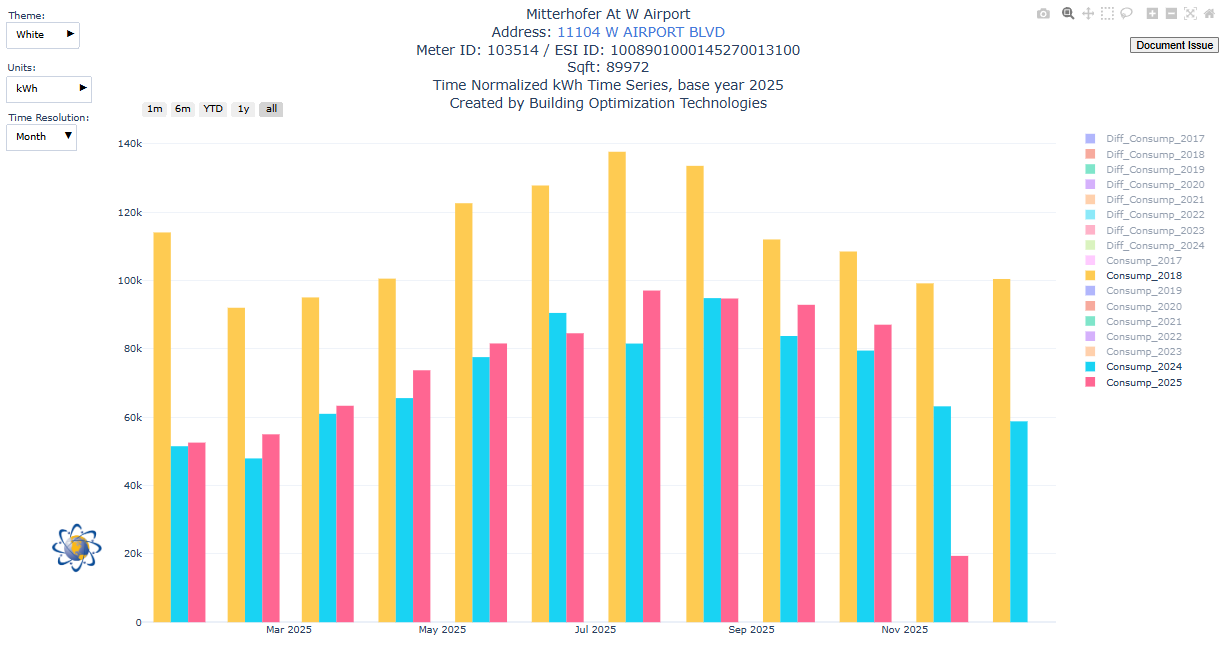
The building-side lever, measured
Time-normalized annual electricity at 11104 West Airport Blvd: roughly a 36% reduction from 2018 to 2025 via scheduling, equipment selection, and continuous monitoring.
See the buildingWhat this means for office tenants
In a typical Gross Modified office lease, the building’s big systems are the landlord’s cost inside the rate, while your suite’s own electricity is yours. So your leverage is twofold: run your suite sensibly (our summer guide covers the habits), and — more powerfully — choose a landlord who runs the building on data. Our four buildings operate under Building Optimization Technologies’ continuous monitoring, with ERCOT peak-season tracking published openly. Disciplined buildings make for boring power bills, and boring is the goal.
Office space where the power bill is managed like an asset
Class A West Houston suites in buildings run on continuous energy data — rates published, operations disciplined.
Browse available suites See the summer playbookMarket structures and tariffs vary by territory and meter class; this is general information, not advice on a specific contract. For contract decisions, review your tariff and usage data — or ask us how we approach it in our own buildings.